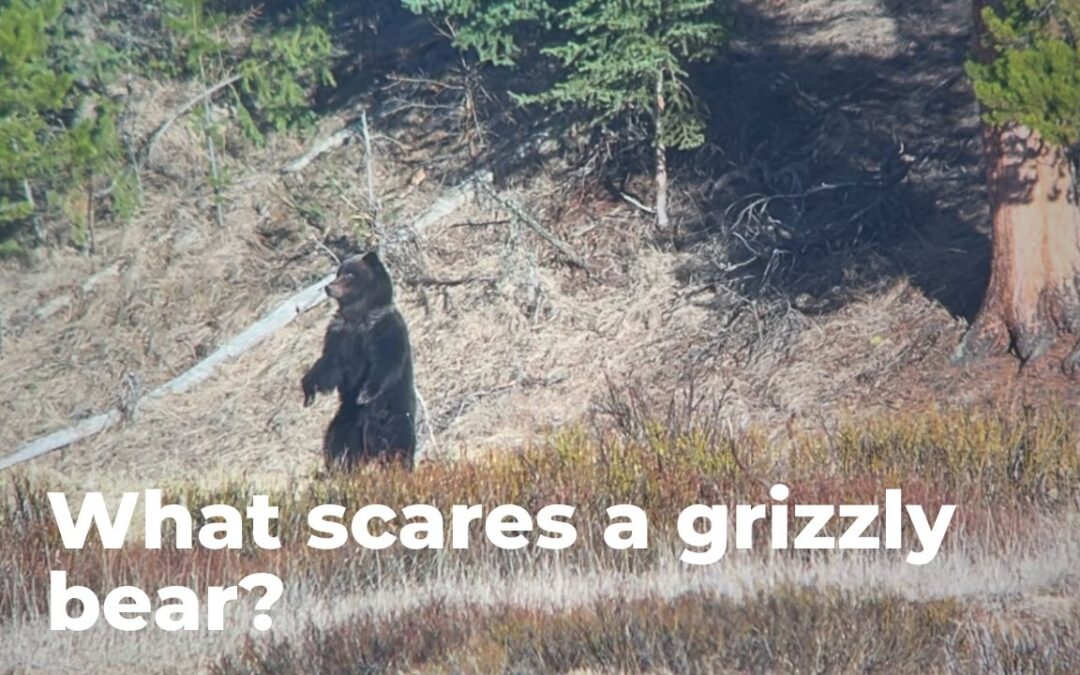
The most mesmerizing aspect of the unfolding scene before us I realize, is invisible. A handsome, mature grizzly bear is in my spotting scope, but he appears unsettled, paranoid one might say.
As wildlife historian Bethan Wallace and I watch, the bear comes out of the forest looking this way and that, like a crossing guard at a busy intersection. Unlike the other grizzly bear we'd seen not an hour before—one who nonchalantly flopped down on his belly along the road an eroded creek bank and rested his chin upon his crossed paws—this one is on edge.
In the vicinity of some stunted willows, the bruin noses about, looks over his shoulder, and eyes the expanse of the open meadow. Then, in an instant, he leaps toward the tree line and sprints into the forest. "What the…” I voice to myself? I instinctively turn my scope in the direction from whence he’d come, but see nothing.
My mind starts a rapid-fire cataloging of the situation. "What's the deal? He's all by himself. He’s the big cheese. There's nothing else even close to him. It's all wide, open, flat terrain.”
What would bother a grizzly bear to this degree? Bison will definitely push bears around, and adult bulls will sometimes go out of their way to roust a bear seemingly for the fun of it, but the nearest bison is a mile away on the other side of Round Prairie. A pack of wolves also garner much respect from a bear—especially a mother with small, vulnerable cubs—but even a large solo male grizzly will parry and weave to protect his posterior from the forceful bites of the canines. But not a single one of the big dogs is anywhere to be seen either. Something else seems to be under his skin.
Jim Garry, respected naturalist and educator, recounted at the 2026 Yellowstone Summit, that there is something that unnerves even the biggest of big bears. In Jim’s recounting of the legendary story, “Wahb: The Biography of a Grizzly,” published by Ernest Thompson Seton in 1900, the fictional bear featured in the tale battles with the intense inner conflict over a perceived outer threat. Wahb survived the tragic loss of his mother and siblings to humans and grew to be a sizable bear, arguably the most dominant bear in the region. Even still, Wahb was haunted by the specter of running into that demon that follows all bears—a bigger bear.
The grizzly is still out of view and and I start thinking that our bear viewing is over when all of a sudden, Bethan says, "he's coming back out!” The large, but tepid bear comes back into the open. I watch as he stares into the distance. He lifts his nose to test the wind, then relaxes. Letting his guard down for a few minutes, the boar plays with some old bones along the tree line, then rolls onto his back, kicking all four legs into the air like someone's pet dog. Then it's back to business.
There is something of interest to him in the open meadow that we cannot see. The remains of a carcass? The bear approaches again. Without warning he explodes at a gallop back into the forest, escaping once again from his invisible foe. This time a coyote appears out of nowhere from the general area; it seems equally startled too. I can only guess that the coyote was also drawn to the scent of a potential meal and made some sort of noise that put the bear on edge.
The bear’s speedy departure may have returned the fright to the coyote who jettisoned the area. I can only imagine that the ground there was impregnated with the odor some sort of food, but quite possibly that of another, bigger bear. With the ability to smell in parts per billion, we can scarcely conceive of what enters a bears nose, much less understand the meaning it finds in a huff of air.
The bear will come back into the opening again, and again, as nervous as before, digging in the soft earth and eating a few morsels. The same attentive, light gray coyote broadly circles our bruin before laying down. Some ravens gather, but that is it. The rest of the story is unknown to us. My mind spins with the possibilities. Much can be inferred by paying attention to the little details of animal behavior, but I'll be forever lost in pondering, if I had a nose like that, would I get to know what a bear knows?
Read and watch more about grizzly bears in Courting Grizzly Bears (video), Grizzly Bears in the Neighborhood, and Capturing a Grizzly and Wolf Encounter in Sculpture.
As wildlife historian Bethan Wallace and I watch, the bear comes out of the forest looking this way and that, like a crossing guard at a busy intersection. Unlike the other grizzly bear we'd seen not an hour before—one who nonchalantly flopped down on his belly along the road an eroded creek bank and rested his chin upon his crossed paws—this one is on edge.
In the vicinity of some stunted willows, the bruin noses about, looks over his shoulder, and eyes the expanse of the open meadow. Then, in an instant, he leaps toward the tree line and sprints into the forest. "What the…” I voice to myself? I instinctively turn my scope in the direction from whence he’d come, but see nothing.
My mind starts a rapid-fire cataloging of the situation. "What's the deal? He's all by himself. He’s the big cheese. There's nothing else even close to him. It's all wide, open, flat terrain.”
What would bother a grizzly bear to this degree? Bison will definitely push bears around, and adult bulls will sometimes go out of their way to roust a bear seemingly for the fun of it, but the nearest bison is a mile away on the other side of Round Prairie. A pack of wolves also garner much respect from a bear—especially a mother with small, vulnerable cubs—but even a large solo male grizzly will parry and weave to protect his posterior from the forceful bites of the canines. But not a single one of the big dogs is anywhere to be seen either. Something else seems to be under his skin.
Jim Garry, respected naturalist and educator, recounted at the 2026 Yellowstone Summit, that there is something that unnerves even the biggest of big bears. In Jim’s recounting of the legendary story, “Wahb: The Biography of a Grizzly,” published by Ernest Thompson Seton in 1900, the fictional bear featured in the tale battles with the intense inner conflict over a perceived outer threat. Wahb survived the tragic loss of his mother and siblings to humans and grew to be a sizable bear, arguably the most dominant bear in the region. Even still, Wahb was haunted by the specter of running into that demon that follows all bears—a bigger bear.
The grizzly is still out of view and and I start thinking that our bear viewing is over when all of a sudden, Bethan says, "he's coming back out!” The large, but tepid bear comes back into the open. I watch as he stares into the distance. He lifts his nose to test the wind, then relaxes. Letting his guard down for a few minutes, the boar plays with some old bones along the tree line, then rolls onto his back, kicking all four legs into the air like someone's pet dog. Then it's back to business.
There is something of interest to him in the open meadow that we cannot see. The remains of a carcass? The bear approaches again. Without warning he explodes at a gallop back into the forest, escaping once again from his invisible foe. This time a coyote appears out of nowhere from the general area; it seems equally startled too. I can only guess that the coyote was also drawn to the scent of a potential meal and made some sort of noise that put the bear on edge.
The bear’s speedy departure may have returned the fright to the coyote who jettisoned the area. I can only imagine that the ground there was impregnated with the odor some sort of food, but quite possibly that of another, bigger bear. With the ability to smell in parts per billion, we can scarcely conceive of what enters a bears nose, much less understand the meaning it finds in a huff of air.
The bear will come back into the opening again, and again, as nervous as before, digging in the soft earth and eating a few morsels. The same attentive, light gray coyote broadly circles our bruin before laying down. Some ravens gather, but that is it. The rest of the story is unknown to us. My mind spins with the possibilities. Much can be inferred by paying attention to the little details of animal behavior, but I'll be forever lost in pondering, if I had a nose like that, would I get to know what a bear knows?
Read and watch more about grizzly bears in Courting Grizzly Bears (video), Grizzly Bears in the Neighborhood, and Capturing a Grizzly and Wolf Encounter in Sculpture.